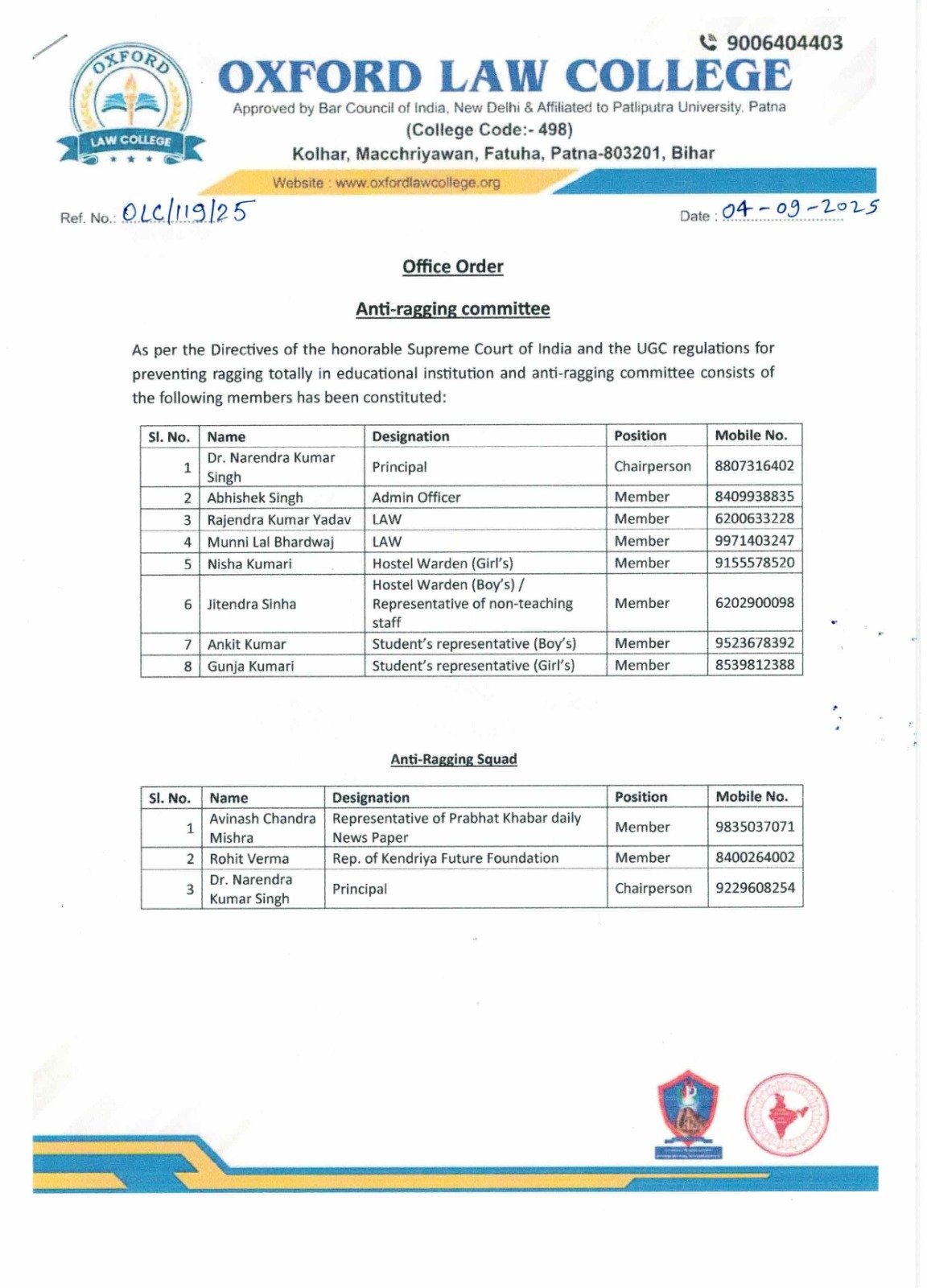
ANTI-RAGGING POLICY
Oxford Law College, Patna — Zero Tolerance Policy Towards Ragging
Zero Tolerance Policy
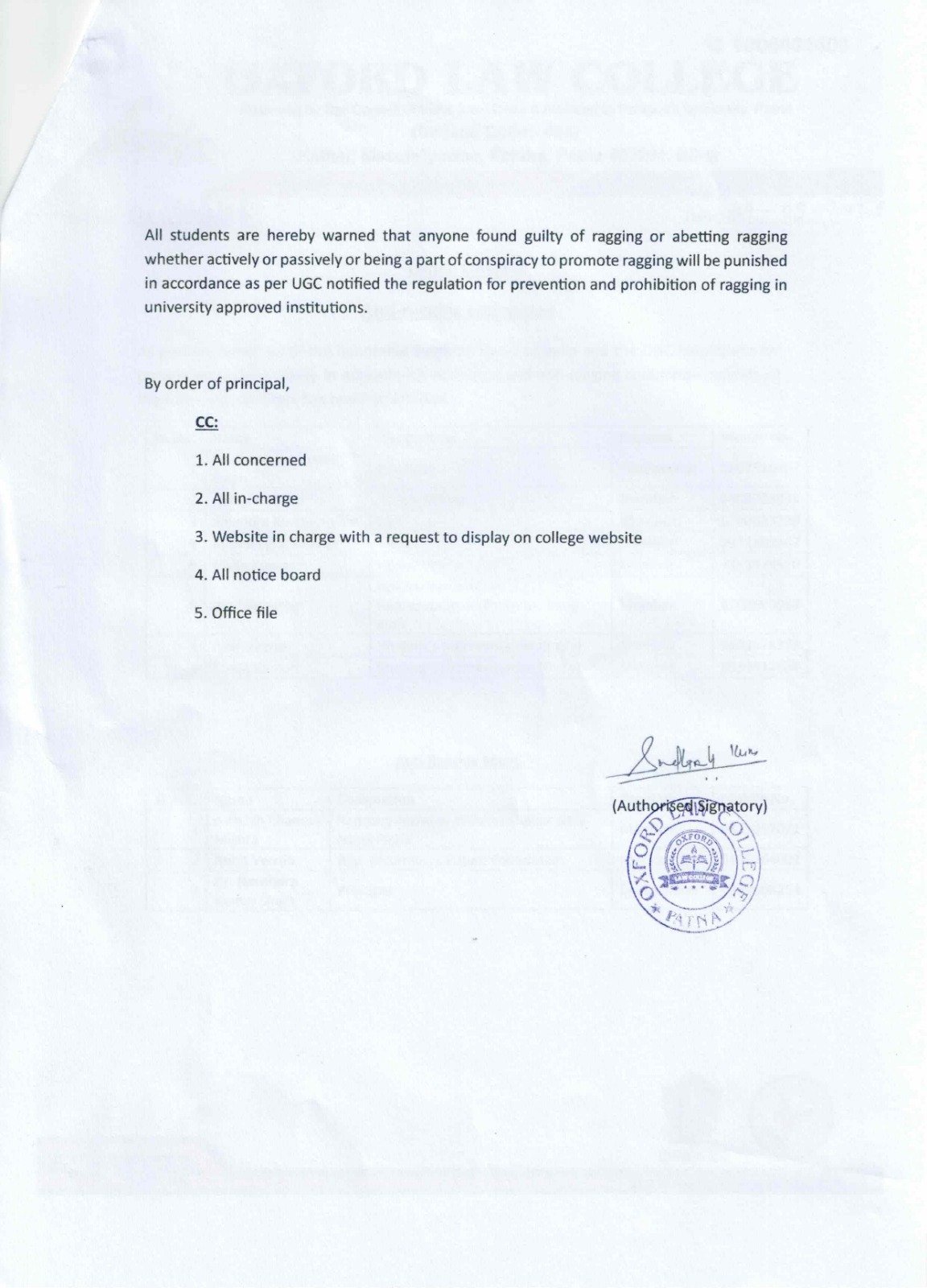
Ragging in any form is strictly prohibited within and outside the college campus. Oxford Law College strictly enforces UGC/BCI regulations regarding anti-ragging. Any student found guilty of ragging will face strict disciplinary action, including expulsion and legal prosecution.
What Constitutes Ragging?
- Any conduct by a student whether by words spoken or written or by an act which has the effect of teasing, treating, or handling with rudeness a fresher or any other student.
- Indulging in rowdy or indisciplined activities that cause or are likely to cause annoyance, hardship, physical, or psychological harm.
- Asking any student to do any act which such student will not in the ordinary course do and which has the effect of causing or generating a sense of shame, torment, or embarrassment.
- Any act of financial extortion or forceful monetary expenditure put on a fresher or any other student.
Mandatory Anti-Ragging Affidavit / Undertaking
As per the directives of the Hon'ble Supreme Court of India and UGC Regulations, it is mandatory for every student and their parents/guardians to submit an online Anti-Ragging Undertaking at the time of admission every academic year.
Fill Online Anti-Ragging Affidavit (antiragging.in)24x7 Emergency Contact & Helplines
College Anti-Ragging Cell
Campus Helpline: +91-9470863401
Location: Administrative Block, Oxford Law college
National Anti-Ragging Helpline
Toll-Free Helpline: 1800-180-5522
Email: helpline@antiragging.in
Website: www.antiragging.in
Punishment for Ragging
Depending upon the nature and gravity of the offense as established by the Anti-Ragging Committee, those found guilty may face one or more of the following actions:
- Suspension from attending classes and academic privileges.
- Withholding or withdrawing scholarship, fellowship, and other benefits.
- Debarring from appearing in any test/examination or evaluation process.
- Cancellation of admission.
- Filing of First Information Report (FIR) with the local police station.